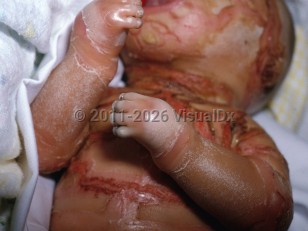
Harlequin ichthyosis, also known as ABCA12-nEDD under a newer classification of nonsyndromic epidermal differentiation disorders (nEDD), is a term used to describe the global encasement of a neonate in thick, hyperkeratotic scales that restrict movement. Shortly after birth, the hyperkeratotic cast cracks, leaving large, adherent plates with deep fissures present throughout the skin's surface. The ears are typically misshapen or absent, with similar disfigurement of the nose, fingers, and toes. Neonates will also have pronounced eclabium (eversion of the lips) and ectropion (eversion of the eyelids). The eyebrows and eyelashes are usually absent.
Harlequin ichthyosis is caused by mutations in ABCA12, which encodes a lipid transporter protein that functions in lipid transport to the keratinocyte via lamellar granules. A loss of function results in compromise of the skin lipid layer. Homozygous mutations and those mutations leading to protein truncation cause a more severe presentation, whereas heterozygous mutations cause milder presentations.
Affected neonates are typically born prematurely and are at risk of dying within several weeks, after succumbing to respiratory insufficiency, hypothermia, sepsis, hypernatremic dehydration, or complications of prematurity. Advanced neonatal intensive care, aggressive topical management, and use of oral retinoids have resulted in the survival of several patients beyond the postnatal period. Survivors may develop severe exfoliative erythroderma that resembles congenital ichthyosiform erythroderma and may have an increased risk of arthritis.
Harlequin ichthyosis
Alerts and Notices
Important News & Links
Synopsis

Codes
ICD10CM:
Q80.4 – Harlequin fetus
SNOMEDCT:
205548006 – Harlequin ichthyosis
Q80.4 – Harlequin fetus
SNOMEDCT:
205548006 – Harlequin ichthyosis
Look For
Subscription Required
Diagnostic Pearls
Subscription Required
Differential Diagnosis & Pitfalls

To perform a comparison, select diagnoses from the classic differential
Subscription Required
Best Tests
Subscription Required
Management Pearls
Subscription Required
Therapy
Subscription Required
References
Subscription Required
Last Reviewed:01/15/2026
Last Updated:01/15/2026
Last Updated:01/15/2026