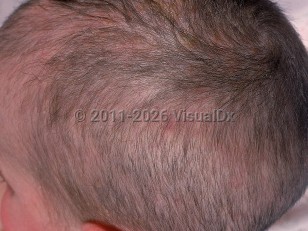
Netherton syndrome (NS) is a rare genetic disorder characterized by the classical triad of congenital ichthyosiform erythroderma, trichorrhexis invaginata (bamboo hair), and an atopic diathesis. In the newer classification of syndromic epidermal differentiation disorders (sEDD), it is also referred to as SPINK5-sEDD and is grouped with disorders of proteases and channel protein deficiencies.
NS is caused by mutations in the serine protease inhibitor SPINK5 (also known as LEKTI – lymphoepithelial Kazal type 5 related inhibitor) and is inherited in an autosomal recessive fashion. SPINK5 is a regulator of skin inflammation, maturation, and desquamation through inhibition of epidermal kallikreins. Loss of SPINK5 function results in increased skin inflammation and defective skin barrier function. This leads to increased transepidermal water loss, electrolyte imbalances, and a high metabolic demand.
The incidence of NS may be as high as 1 in 50 000 live births. The disorder is reported in all races / ethnicities, with females affected more than males.
NS is characterized by diffuse ichthyosiform erythroderma with generalized scaling and peeling of the skin at birth in 80% of affected neonates and sparse hair or congenital alopecia. Twenty percent of neonates experience complications from electrolyte imbalance, thermoregulatory problems, pneumonia, and/or sepsis and show failure to thrive. In addition, there is an increased susceptibility to skin and respiratory infections.
Beyond infancy, clinical signs are variable but tend to improve with time. Many patients will have cutaneous complications limited to an eczematous rash or a serpiginous migratory annular erythema with double-edged peripheral scaling named ichthyosis linearis circumflexa, a distinctive feature of NS. Pruritus is common. In patients with severe disease, ichthyosiform erythroderma can persist throughout life. Although skin changes tend to improve with age, intermittent exacerbations are common. Many patients will have hair abnormalities, primarily trichorrhexis invaginata, which develop in infancy but may improve with age. The hair is generally sparse, short, and brittle.
Seventy-five percent of NS patients have an atopic diathesis and will be affected with atopic dermatitis, asthma, hay fever, food allergies, peripheral eosinophilia, and/or increased immunoglobulin E (IgE) levels.
Extracutaneous manifestations seen from birth through childhood include diarrhea (due to intestinal villous atrophy) and resultant malabsorption. Eosinophilic esophagitis has also been reported.
Early in life, ocular findings (such as conjunctivitis, blepharitis, and ectropion) and cognitive developmental delay have been reported that improve during the second decade of life.
Adults with NS have been reported to develop extensive human papillomavirus (HPV)-associated papillomatous papules and plaques of the anogenital region, and an increased risk of squamous cell carcinoma (SCC) has also been reported.
Netherton syndrome in Adult
See also in: Hair and ScalpAlerts and Notices
Important News & Links
Synopsis

Codes
ICD10CM:
Q80.8 – Other congenital ichthyosis
SNOMEDCT:
312514006 – Netherton syndrome
Q80.8 – Other congenital ichthyosis
SNOMEDCT:
312514006 – Netherton syndrome
Look For
Subscription Required
Diagnostic Pearls
Subscription Required
Differential Diagnosis & Pitfalls

To perform a comparison, select diagnoses from the classic differential
Subscription Required
Best Tests
Subscription Required
Management Pearls
Subscription Required
Therapy
Subscription Required
References
Subscription Required
Last Reviewed:02/08/2026
Last Updated:02/22/2026
Last Updated:02/22/2026
Netherton syndrome in Adult
See also in: Hair and Scalp